

For more than a decade, live cyberattack maps have held a unique place in cybersecurity. They're visual and dramatic, and they instantly communicate what every security team already knows: attacks are nonstop, global, and increasingly automated. Back in 2019, SecureWorld highlighted some of the most popular maps available at the time. Six years later, the cybersecurity ecosystem looks very different—but the fascination with real-time threat maps hasn’t gone away.
In fact, they remain powerful tools for awareness, education, and board-level communication. But just as important is understanding what they don’t show, especially as modern threats become more targeted, stealthy, and driven by identity-based compromise and supply-chain weaknesses.
Below is the 2025 update: the most useful live attack maps available today, how they work, and how security leaders can use them strategically without overstating their significance.
Top live cyberattack maps
NETSCOUT Cyber Threat Horizon Real-Time DDoS Attack Map

NETSCOUT’s map provides a detailed view of DDoS activity worldwide, using real-time telemetry from its global Arbor network. Security teams can drill into attacks by size, target region, and method—making it especially useful during high-volume botnet surges or geopolitical flashpoints.
Radware Live Threat Map
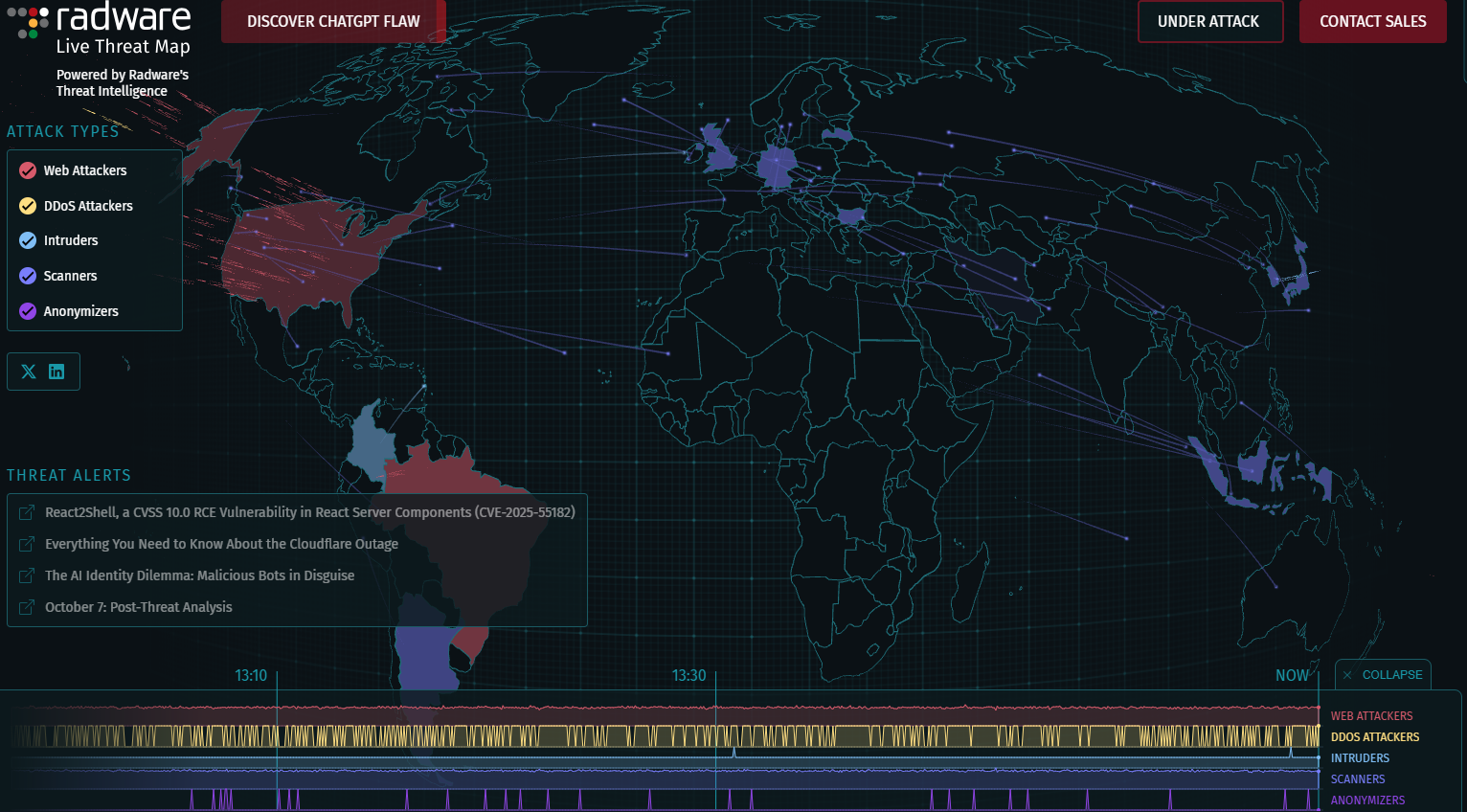
Powered by Radware’s deception network, this map highlights active attack campaigns hitting organizations worldwide. It focuses heavily on DDoS, malicious bot activity, and network intrusions, providing viewers with near-real-time visibility into automated attacks that Radware is mitigating.
Check Point Live Cyber Threat Map
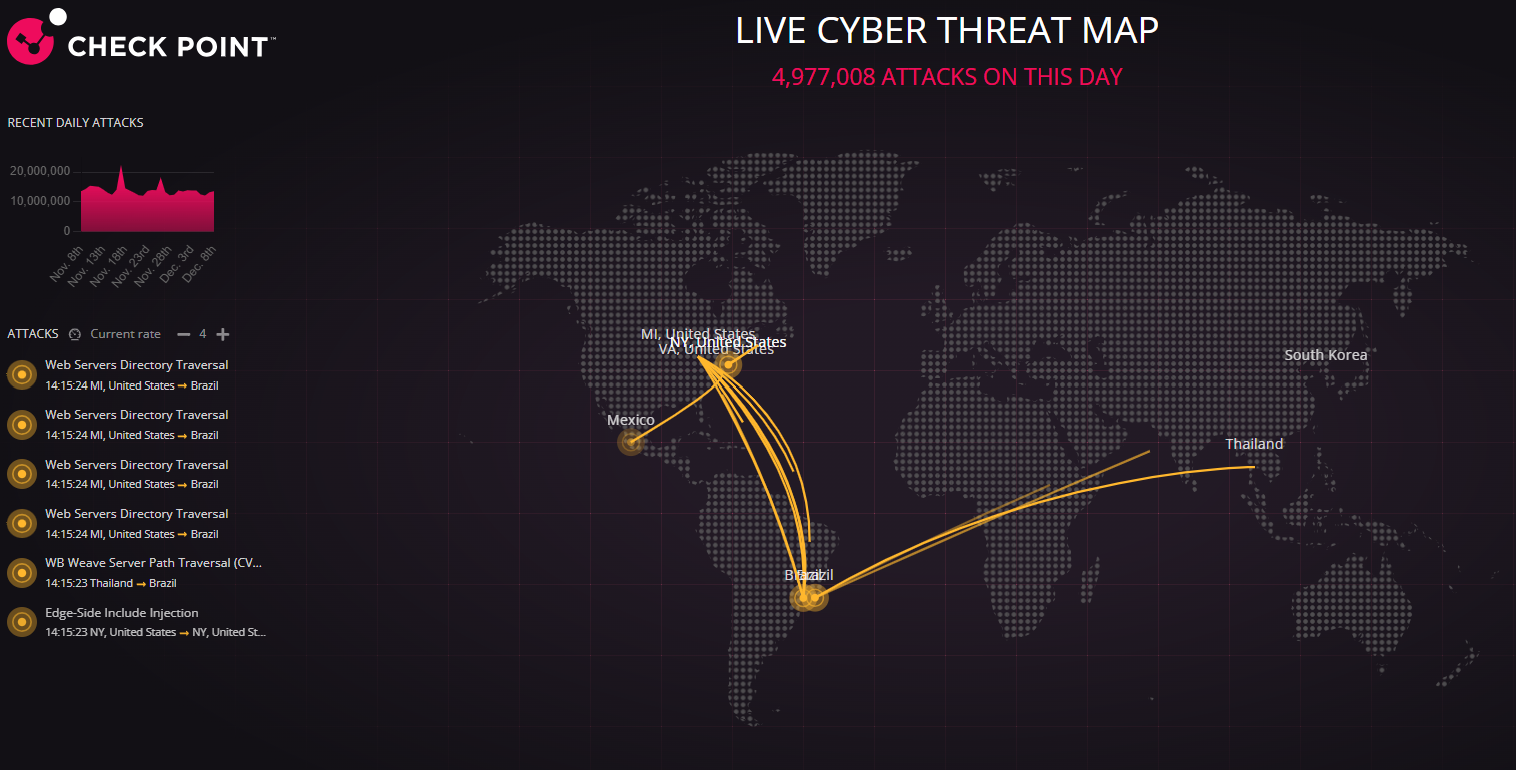
Check Point aggregates data from its global threat intelligence network and displays malware, phishing attempts, exploit activity, and suspicious traffic patterns. It’s more detailed than some others, and the daily “top threat” summaries often reflect major trending campaigns.
Fortinet FortiGuard Live Threat Map
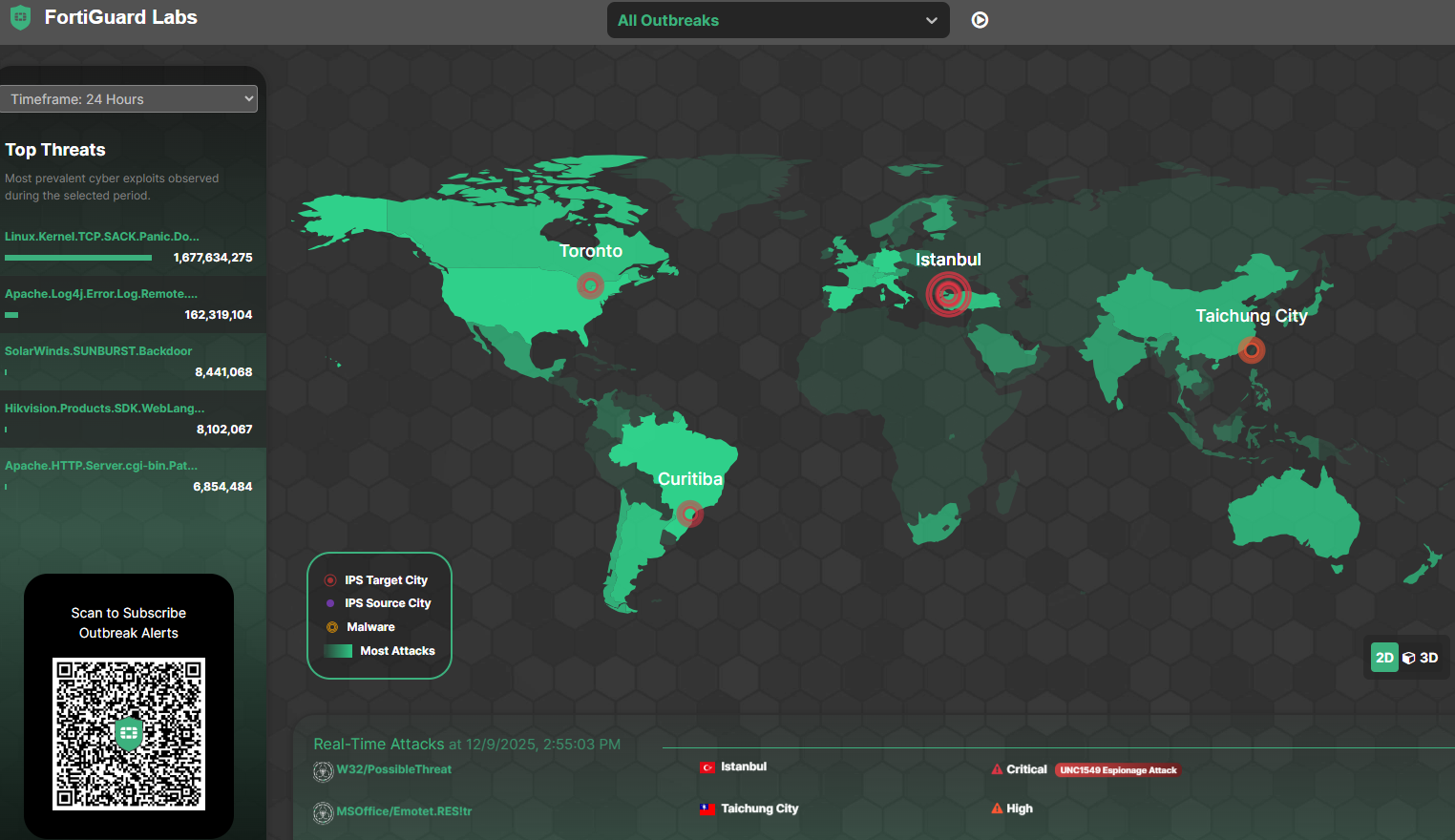
Fortinet’s map layers threat activity over global regions with options to view by attack type, time of day, and local hotspots. It ties directly into the FortiGuard Labs intelligence pipeline, making the data more actionable for teams running Fortinet stacks.
Imperva Live Cyber Threat Attack Map
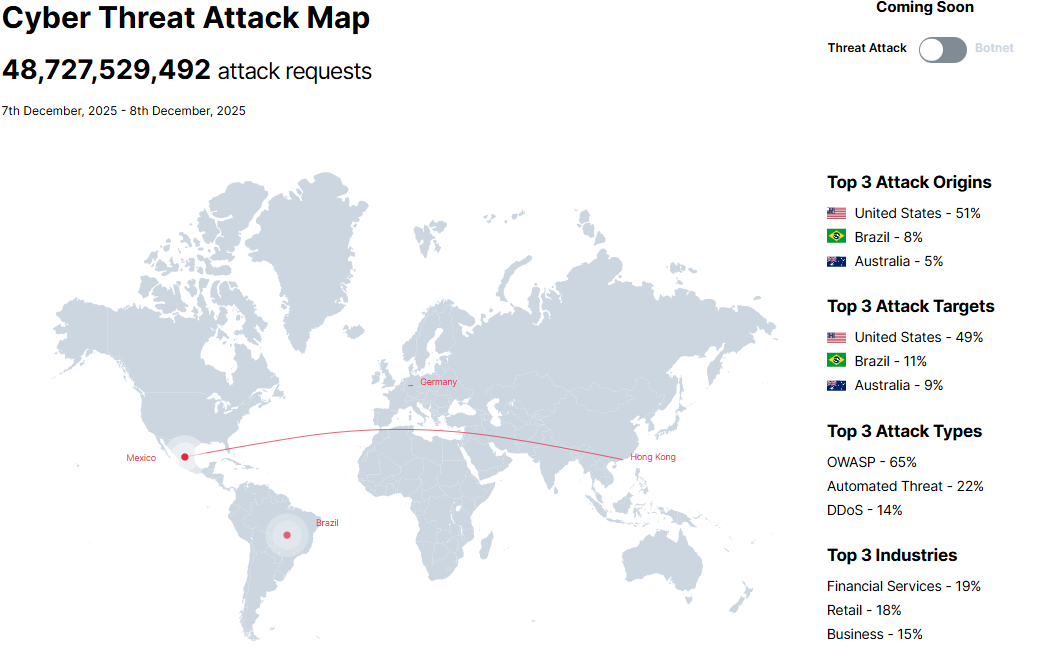
Imperva’s map visualizes attacks blocked or detected by its application security solutions—especially bot traffic, app-layer attacks, and volumetric DDoS. It’s less flashy than some others, but it can provide valuable context on how adversaries probe public-facing applications.
Bitdefender Live Cyber Threat Map
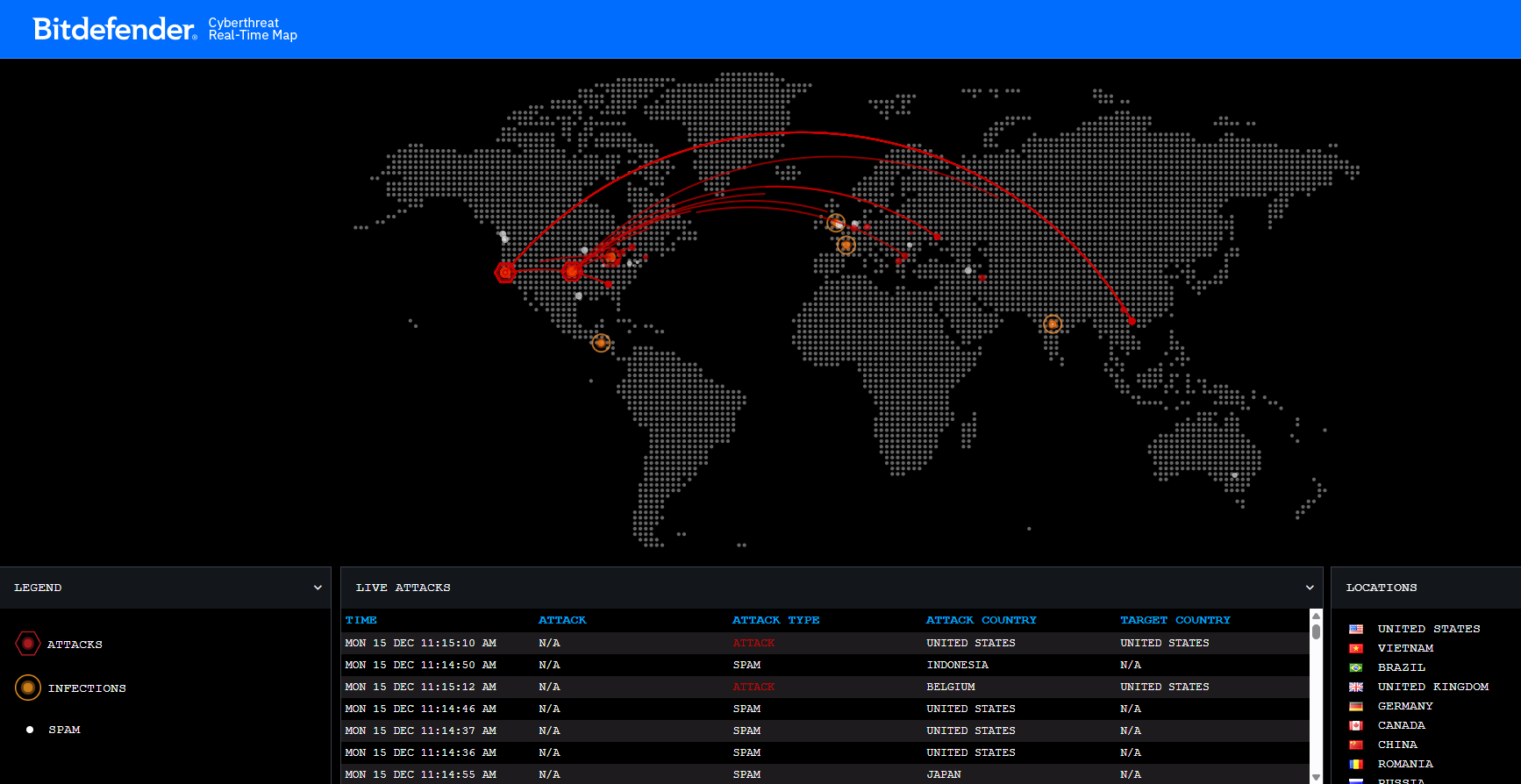
Drawing on Bitdefender’s telemetry from endpoints and network sensors, this map shows live malware detections, attack origins and destinations, and threat classifications. It’s invaluable for tracking cross-border attack patterns and the speed at which malware propagates.
What live attack maps do well
Despite their limitations, live maps have real value when used correctly:
They instantly convey scale.
Even a few seconds on a global map shows how relentless malicious traffic is. This makes them highly effective in executive briefings, tabletop exercises, and employee awareness sessions.
They provide high-level situational awareness.
Maps often highlight spikes in attack traffic, new waves of malware propagation, or unusual geographic patterns—applicable early warnings when paired with deeper intelligence.
They support training and education.
Because they’re visual and easy to understand, security leaders often use them to introduce non-technical audiences to concepts like DDoS, botnets, and malware distribution.
What these maps don't tell you
No matter how dramatic the visuals, threat maps have essential limitations that CISOs and analysts should keep in mind:
They don’t show stealthy or targeted attacks.
Zero-days, supply-chain compromises, credential theft, insider threats — none of these appear on threat maps, even though they represent some of the most damaging incidents today.
They don’t confirm attribution.
Just because an attack appears to originate in a particular country doesn’t mean the threat actor is based there. Botnets, proxies, VPNs, and compromised hosts distort the picture.
They show vendor-specific data, not the whole world.
Each map reflects only what that vendor detects across its customers and sensors. A big spike on one map may be invisible on another.
They emphasize volumetric events.
DDoS and automated scanning light up maps. Ransomware operators quietly sitting inside a network for 53 days do not.
Understanding these caveats helps ensure organizations use these tools responsibly and avoid drawing misleading conclusions from a flashing line between two countries.
How to use live attack maps strategically
Security leaders can get the most value from live maps by pairing them with context and operational intelligence:
Use them as communication tools, not detection tools.
They’re excellent for presentations, board updates, and illustrating the importance of proactive investment.
Correlate map activity with internal telemetry.
If a vendor map shows a sudden uptick in a particular malware family, check your SIEM, EDR, and network logs for matching signals.
Pair them with strong threat-intel feeds.
Strategic and tactical threat intelligence provides the real insight—actor behavior, exploit chains, motivations—not just attack volume.
Use them during crisis response or high-alert periods.
Geopolitical tensions, vendor disclosures, or major CVEs often align with spikes in malicious activity. Maps can provide helpful context during those moments.
Why these maps still matter
Even as cybersecurity shifts toward identity compromise, social engineering, and software supply chain attacks, the volume of automated malicious traffic hitting organizations continues to climb. Botnets are expanding, DDoS attacks are reaching record sizes, and commodity malware campaigns remain a constant backdrop to more advanced intrusions.
Live maps won't tell the whole story—but they do highlight one of the most essential truths in modern cybersecurity: attacks never stop. And for many CISOs and practitioners, that visual reminder still matters.