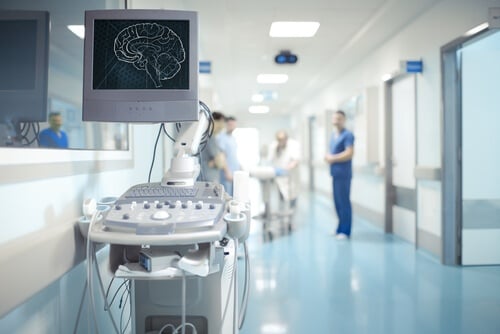
We are poised to witness one of the most significant technological advancements in human history: the direct interaction between human brains and machines. Brain-computer interfaces (BCIs), neurotechnology, and brain-inspired computing are no longer science fiction. From Neuralink's devices that let us control actions with our thoughts to experimental computers made from human brain cells and injectable neural chips from MIT, these advancements could change medicine, work, and education and enhance human abilities.
As I have discussed in my recent writings about the upcoming merging of technologies, AI, brain-like computing, quantum technology, the Internet of Things, and immersive systems work together as powerful tools. In this era of neuromorphic brain/computer technologies, the same breakthroughs that potentially upload skills straight to the brain or enable "mind captioning" via AI-interpreted scans also introduce weaknesses that could endanger the most sensitive data imaginable—our ideas, intents, and neurological signals. See: The Meshing Of Minds And Machines Has Arrived
The rise of neurotechnology and its convergence with existing threats
At the core of this AI evolution is neuromorphic computing, a paradigm inspired by the human brain's structure and function. Unlike current AI models, which rely on binary supercomputers to process billions or even trillions of parameters, neuromorphic systems use energy-efficient electrical and photonic networks modeled after biological neural networks. Neuromorphic computing: the future of AI | LANL
Neuromorphic computing is developing faster than predicted by replicating the human brain's neural architecture for efficient, low-power AI computation. As highlighted in talks around brain-inspired chips and meshing, these systems are blurring distinctions between biological and silicon-based computation. In the meanwhile, bidirectional communication is made possible by BCIs, such as those being developed by businesses and research facilities, which can read brain activity for feedback or control and possibly write signals back to affect cognition. For an informative overview of the types of neuromorphic computing, see Neuromorphic Computing: The Future of AI Inspired Technology.
This convergence intensifies the existing cybersecurity threats. AI, already key to threat identification and attack orchestration, might supercharge "neuro-phishing"—a cognitive warfare development from traditional phishing, where adversaries leverage neurological data for manipulation. See my book, Inside Cyber: How AI, 5G, IoT, and Quantum Computing Will Transform Privacy and Our Security.
When post-quantum encryption is required to safeguard critical bio digital streams, quantum dangers become more significant. Another layer is added by space-based systems, since satellite-enabled connections may increase the reach of BCI while creating orbital and supply-chain risks.
Neurotechnology opportunity and security must be balanced, as the World Economic Forum has rightly stressed. Without safeguards, compromised brain connections could lead to mental manipulation, illicit data exfiltration (neural patterns as the ultimate biometric), or even physical injury through altered motor control. Privacy dissolves when brain signals—far more revealing than any app data—become hackable.
Key risks in horizon
1. Data privacy and "thought" exploitation
Neural data is essentially personal. Breaches could expose memories, emotions, or subconscious biases. Adversaries may reverse-engineer intentions for coercion, fraud, or espionage as AI decodes brain scans for "mind captioning" or talent uploading.
2. Cyber-physical-neural attacks
Compromised BCIs blur cyber-physical boundaries farther than OT-IT convergence already has. A malevolent actor might damage medical implants, alter augmented reality overlays, or weaponize neurotech in national security scenarios.
3. Supply-chain and hardware vulnerabilities
Implantable devices rely on worldwide supply chains prone to tampering. Neuromorphic hardware, while efficient, provides additional attack surfaces if not designed with zero-trust principles.
4. Ethical and bias amplification
Using AI to process neural signals can introduce biases, which may result in unfair treatment in brain-augmented systems These correlate with broader 2026 trends: agentic AI extending attack surfaces, quantum unpreparedness (with 90% of companies trailing), and the need for human-centric intelligence to guide decisions.
Pathways to secure the neural frontier
Proactive governance is needed. We must expand frameworks like NIST's AI and quantum risk management to neurotechnology:
-
Develop neural-specific standards — Encryption adapted to bio-signals, quantum-resistant protocols, and secure neural encoding/decoding
-
Adopt zero-trust for bio-digital interfaces — Verify every neurological interaction, segment access, and detect anomalies in real time
-
Regulatory and ethical frameworks — International coordination, analogous to calls for neurosecurity, to prevent misuse while stimulating innovation
-
Human-centric design — Prioritize privacy-by-design, informed consent, and augmentation that improves rather than abuses human potential
The neural frontier needs careful consideration just like AI, quantum, and space challenges, as different technologies come together and change our world, from edge AI in brain-like systems to interconnected physical environments. To safeguard not only data but also the core of human cognition, cybersecurity must change. See: How AI and Quantum, And Space Are Redefining Cybersecurity
We are not just progressing towards a future defined by these technologies; instead, we have already reached that juncture. We must assess our preparedness to navigate it judiciously. The meshing of minds and machines has arrived. Securing it will define trust in the future era of human-machine partnership.
This article appeared originally on LinkedIn here.