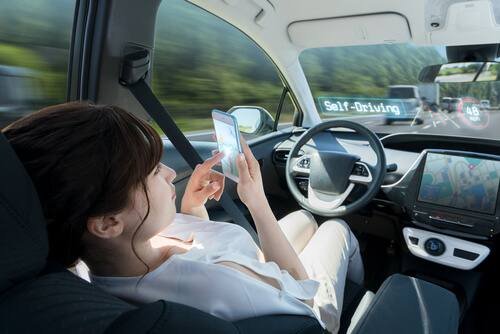
The future of autonomous vehicles took a surprising turn on February 4, 2026, when Waymo's Chief Safety Officer, Dr. Mauricio Peña, publicly confirmed that Waymo's driverless taxis sometimes rely on remote human operators—including workers based in the Philippines—to assist vehicles when the onboard autonomous system encounters challenges.
This revelation, disclosed during a U.S. Senate Commerce, Science, and Transportation Committee hearing, has sparked bipartisan alarm among lawmakers over cybersecurity vulnerabilities, national security risk, and transparency in autonomous vehicle (AV) operations.
Autonomy and the 'human in the loop'
Waymo has long described its technology—branded the Waymo Driver—as fully autonomous and capable of navigating complex driving environments without human intervention. In testimony and subsequent press interactions, Peña acknowledged that remote "fleet response" agents are available to provide guidance when vehicles encounter problematic scenarios. However, Peña and company spokespeople stressed that these agents do not directly steer or control vehicles. "They provide guidance," Peña said. "Waymo asks for guidance in certain situations and gets human input. But the Waymo vehicle is always in charge of the dynamic driving task."
Yet the hearing underscored a disconnect between marketing claims and real-world practice—a gap that lawmakers like Sen. Edward Markey (D-MA) seized upon. Opening his questioning, Markey framed the issue bluntly: "When an AV such as a Waymo encounters a situation on the road that it doesn't know how to handle, the Waymo phones a human friend for help."
That "friend," as Markey described them, includes remote workers in the Philippines, a revelation that drew pointed concern from lawmakers.
"Having people overseas influencing American vehicles is a safety issue," Markey said, noting the potential for outdated information relayed across time zones, uncertainties about foreign licensing standards, and cybersecurity risks that few consumers fully appreciate.
Cybersecurity and national security implications
The overseas component touched a nerve among senators focused on transportation safety and digital risk. Remote support systems—especially those involving personnel in foreign jurisdictions—introduce an expanded attack surface for threat actors. Even if operators don't control vehicles directly, the communication infrastructure linking remote workers and vehicle systems must be safeguarded against tampering, data interception, or unauthorized access.
Markey described the model as presenting "tremendous cybersecurity vulnerabilities," a warning that security professionals will want to unpack further.
When pressed about cybersecurity protections during the hearing, Peña replied that Waymo "takes a number of measures to identify vulnerabilities, perform risk assessments, and then mitigate those vulnerabilities." He also highlighted design choices intended to insulate critical safety systems, saying "You cannot actually hack into it, connect to it, and drive it remotely."
While that assurance addresses unauthorized remote control, it leaves open questions about the integrity of guidance input channels and how risk assessments translate into real-world operational security. Cybersecurity experts caution that even advisory systems—not just direct control systems—must be treated as critical attack surfaces in high-stakes cyber-physical environments.
Transparency and workforce questions
Beyond cyber risk, lawmakers challenged Waymo on transparency around the size and composition of its remote assistance workforce. Peña confirmed that Waymo employs guidance agents both in the U.S. and abroad, but could not provide a breakdown of how many workers are overseas versus domestic. That uncertainty drew sharp rebuke from Markey: "It's very curious that someone running the program has no idea how that workforce breaks down."
In an era where AI, autonomy, and remote work converge, the balance between cost-effective global labor and reliable, secure operations remains unsettled. The presence of overseas workers in safety-critical roles also reignites debate over outsourcing sensitive tasks for systems operating on U.S. public roads.
Safety context amplifies tech scrutiny
The timing of the hearing amplified concerns. Federal agencies—including the National Transportation Safety Board and the National Highway Traffic Safety Administration—are investigating recent incidents involving Waymo robotaxis, such as a January 2026 collision with a child near a California elementary school and repeated failures to yield to school buses in Texas.
These events, combined with the remote assistance admission, have fueled legislative momentum toward a comprehensive Federal AV safety framework—one that could address not just technical standards but workforce and cybersecurity requirements for autonomous systems.
Looking ahead: policy and cybersecurity imperatives
As autonomous vehicle deployments scale—Waymo currently operates thousands of vehicles across multiple U.S. cities—so too will the need for clear, federally unified regulations that account for cybersecurity, remote support infrastructure, transparency, and safety assurance. Lawmakers across the aisle signaled that without federal guardrails, public trust and systemic safety could lag behind technological advancement.
For security leaders, the hearing spotlights the evolving risk landscape where AI, cloud services, and cyber-physical systems intersect. Ensuring the security of autonomous vehicles isn't just about firewalls and encryption; it involves securing the entire operational ecosystem, including remote human-in-the-loop systems, international personnel, and the digital channels that connect them.
Follow SecureWorld News for more stories related to cybersecurity.